penetrator
US
・UK
A1 初級
n.名詞侵徹
影片字幕
人類能否阻止小行星殺死地球? (Can Humanity Stop A Planet-Killing Asteroid?)
12:44
- In about a week, we'll Just send one penetrator,
大約一週後,我們將發射一個穿透器,
- Once our rocket arrives, it puts the penetrator
我們的火箭抵達後,會將穿透器
美國 B-2 轟炸機如何利用誘餌和欺騙手段襲擊伊朗福爾道核設施 #伊朗 #美國 (How US B-2 Bombers Strikes Inside Iran’s Fordow Nuclear Site using Decoy & Deception #iran #usa)
12:03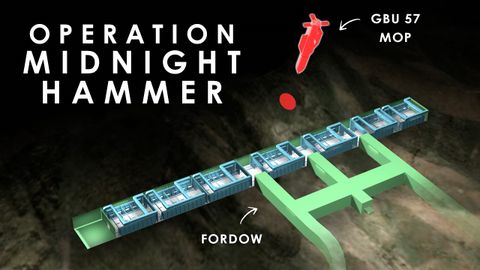
- Meanwhile, the main attack group, consisting of seven B-2 bombers armed with massive Ordnance Penetrator MOP bunker-busting bombs, flew eastward toward Iran.
與此同時,由 7 架 B-2 轟炸機組成的主攻擊機群攜帶大型 "穿甲彈"(MOP)掩體炸彈,向東飛向伊朗。
- The bomb, known as the Massive Ordnance Penetrator, weighs approximately 30,000 pounds, which is around 14,000 kilograms.
這枚炸彈被稱為 "大規模殺傷性武器",重約 3 萬磅,約合 1.4 萬公斤。
最新消息:我們所知道的美國炸彈襲擊伊朗核基地的情況 (BREAKING: What we know about U.S bombs striking Iranian nuclear sites)
07:08
- They're technically called a massive ordnance penetrator and what they are these huge really heavy bombs
從技術上講,它們被稱為 "巨型軍械穿甲彈",是一種巨大的重型炸彈。
特朗普轟炸伊朗核設施背後的策略 | WSJ (The Tactics Behind Trump’s Bombing of Iran’s Nuclear Facilities | WSJ)
04:02
- Then from about 6:40 to 7:00 p.m. Eastern, the B2s dropped huge bunker buster bombs on their targets, 12 GBU 57 massive ordinance penetrator bombs were dropped on Fordo.
然後,從東部時間下午6:40到7:00左右,B2轟炸機向目標投擲了巨大的掩體炸彈,向福爾多投擲了12枚GBU 57大型彈藥穿甲彈。
最新消息:伊朗威脅 "立即 "打擊美國在卡達的空軍基地 (BREAKING: 'Imminent' threat of Iranian strike on US airbase in Qatar)
12:38
最新消息:美國對伊朗發動攻擊 (BREAKING: US launches attack against Iran)
03:28
- Um and this again, we'll get more information about the exact targets and what uh bombs were used, we expect that the GBU 57, the bunker buster, the massive penetrator bomb may have been one of those used.
我們將再次獲得更多有關確切目標和所使用炸彈的資訊,我們預計GBU 57、掩體炸彈、巨型穿透炸彈可能是其中使用的一種。
這枚重達 30,000 磅的美國炸彈可摧毀伊朗最深的核掩體 | WSJ 裝備 (This 30,000-lb U.S. Bomb Can Destroy Iran’s Deepest Nuclear Bunkers | WSJ Equipped)
03:42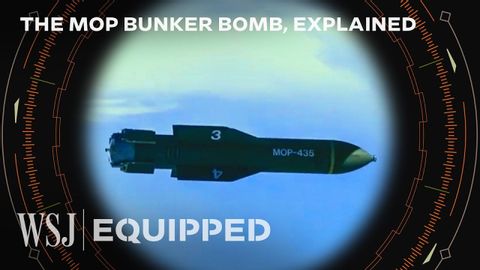
- Known as a massive ordnance penetrator.
被稱為大型彈藥穿甲彈。
- It is called a massive ordnance penetrator.
它被稱為大規模彈藥穿甲彈。
特朗普稱談判是可能的,伊朗警告美國的攻擊將給該地區帶來 "地獄" | BBC News (Iran warns US attack will bring “hell” to region as Trump says negotiation is possible | BBC News)
11:17
- It is the only aircraft capable of effectively deploying the GBU-57, the massive ordnance penetrator that weighs in at 30,000 pounds.
它是唯一能夠有效部署 GBU-57 的飛機,這種巨大的彈藥穿甲彈重達 30,000 磅。
伊朗離擁有核武器還有多遠--為什麼以色列現在要轟炸他們?| 英國廣播公司新聞 (How close is Iran to having a nuclear weapon - and why has Israel bombed them now? | BBC News)
25:41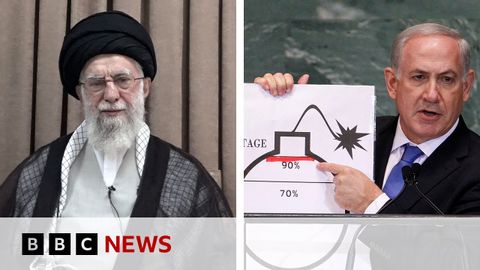
- Now the reason why the US is so important in this is that Israel does not have the ordnance, the bombs to penetrate deep enough underground in somewhere like Fordow where there is a secret or semi-secret enrichment facility and for that it would need America's B2 with something called the massive ordnance penetrator but there would be major considerations and blowback for the US and its Gulf Arab allies if it got into this war.
之所以美國在其中如此重要,是因為以色列沒有足夠的彈藥和炸彈來深入福爾多等地的地下,那裡有一個祕密或半祕密的鈾濃縮設施,為此以色列需要美國的 B2 型大規模彈藥穿透器,但如果以色列捲入這場戰爭,美國及其海灣阿拉伯盟國將面臨重大的考慮和打擊。
- Yeah Frank alluded to it the massive ordnance penetrator the official name for it is the GBU-57 it can contain a 13,600 kilogram warhead or about 30,000 pounds it's basically Matthew a massive massive bomb the IDF doesn't have anything like this the only way that this particular weapon can be delivered is through the B-2 Spirit stealth bomber they're around two million two billion dollars a unit an aircraft so if if I was looking at the question on how does the US get involved as a former strategic military planner you'd be looking at where the gaps in IDF capability is the IDF don't have any gaps in targeting ballistic missile sites surface-to-air missile systems or strategic leadership but it does have a huge gap in being able to penetrate something like Fordo now it's not a foregone conclusion that the GBU-57 could actually destroy the Fordo plant it's more likely to degrade it and it would be more likely to have multiple airstrikes using the GB-57 in order to that let me bring Nafisa in from Beirut and a whole range of questions but some of them are really simple in what they're trying to find out and I've got a couple here and and they want to start by knowing who is Iran's leader first of all well Iran's supreme leader he's the head of the state he is the religious figure but he has a lot of power much bigger than what a president the country's president can have he is considered as the commander and chief of the staff of armed forces and he is a decision maker for major decisions that should be made in the country including negotiations with the US he is the one that he would give green light to diplomats and foreign ministry that they can go ahead and speak with the US over a nuclear program another question that follows on from that how much support is there for this regime well people are divided but and I haven't been in Iran for 15 years now we can't go there but what we gather that that division is going deeper and deeper Iran has witnessed massive protest only two years ago against the regime it was a mass protest it was widespread and people were especially youth and women participated in that protest asking their rights and the freedom and social freedom mainly and also some wanted the end of this regime but but we cannot ignore that this regime still has its own roots and its own supporters how the percentage is not really clear but the issue is that the armed forces majority of armed forces are connected to the regime and they are still supporting the regime because they receive the power from the regime but people inside right now the I think the youth they want new life so that can tell you that probably the majority of youth don't want this regime Frank I've got a question from Rosina who asks how close is Iran to having a nuclear weapon but before you actually answer that I just want to take viewers through a few of what Benjamin Netanyahu has said over the years because last week on the 12th of June he said if not stopped Iran could have a nuclear weapon in a very short time within a year or maybe a few months that's what he said last week in 2018 he said Iran has the wherewithal to do it very quickly in 2015 he said they are weeks away from having an entire arsenal of nuclear bombs in 2012 he said they're close six months away from having enough enriched uranium to have an atomic bomb in 2006 Iran is gearing up to having 25 atomic bombs a year in 1996 Netanyahu told US lawmakers ladies and gentlemen time is running out and in 1995 he said Iran is capable of creating nuclear bombs between three and five years so that arches over nearly three decades so Frank what is the answer to that question how close is Iran okay so first of all I think let's just get this out on the table Iran says they have no military their intentions are entirely peaceful that their nuclear program is for civil use for power generation Israel clearly doesn't believe them some of their actions have aroused suspicion not just in Israel but also countries like the UK and and others but you're absolutely right to list that you know there is an accusation here that Israel or at least Benjamin Netanyahu has been crying wolf with this now there was a deal let's not forget something called the JCPOA this was the Joint Comprehensive Plan of Action it was the crowning glory of President Obama's foreign policy and it was concluded in 2015 also called the Vienna nuclear deal which in return for the partial lifting of sanctions on Iran it put in place some very strict inspections by UN nuclear inspectors inside Iran and Donald Trump pulled the US out of it Iran waited a year and then said okay you know what if they're not going to take part then nor are we so they have they broke a lot of the protocols now very importantly about a week ago the IAEA that's the UN's nuclear watchdog the International Atomic Energy Agency pronounced that Iran was in breach of its non proliferation obligations that is not the same as saying they are about to produce a nuclear weapon Mikey let me bring you back in and a lot of questions still to get through so in terms of answers let's try and keep them condensed a really quick one here from Asha who says will the US's entry if they enter this conflict and not provoke Iran to strike US targets yeah Asha there's certainly risk I assess risk is capable of capability versus intent and probability versus consequence and it's a it's a graduated and proportionate risk assessment on whether that will happen the consequences for the US are significant there are about 40 to 50,000 US troops based in 19 locations across the Middle East you've got far west Royal Air Force Acre to which is on the southern tip of Cyprus there are US personnel based there you've got what's called the chaotic the Combined Air Operations Center that's effectively providing the military picture across all of the Middle East for all of the US operations you've got a US naval facility in Bahrain q8 is the main logistics hub for all US operations so there is a significant amount of risk there but it all depends on how the US decide and to what extent the US decide to get involved and I think that would probably start with something like the b2 stealth bomber Nafisa let's go back to you in Beirut because we've heard over days now a number of times the possibility that's being mooted of taking out the supreme leader assassinating him if that was to happen what are the likely consequences the consequences it will be a big blow for the regime of course for the government of Iran and they will lose their head by and he will be killed by another country which will be humiliating but there are replacement for him although in the in recent years because of the demand of reform inside there have been speculation and also there have been discussion over that this system is doesn't work and maybe there shouldn't be any respect replacement for Iran's second supreme leader which is mr. Khamenei after mr. Khomeini who was the leader of the revolution actually Frank let me bring you back in because of course there's been a long lead-up to what we've seen over the last six days a question here from Craig who says how coordinated are Iran's proxy forces can they in effect be a second front I don't think any longer no I mean the Quds Force that's part of the Iranian Revolutionary Guards this is their job coordinating those but since the October the 7th Hamas led raid into Gaza in 2023 Israel has systematically taken down a lot of this kind of first line of defense that Iran had they have depleted Hamas in Gaza they have largely depleted Hezbollah's arsenal in Lebanon Syria is no longer an ally of Iran because Bashar al-Assad has been deposed not by Israel but by jihadists and the Houthis are relatively constrained in Yemen so they're not very well coordinated no Mikey as a result of some of the things that Frank has been talking about that we've seen over the last few months a question here from Craig who says is Iran's missile arsenal capable of overwhelming things like Israel's iron dome because we know that Iran very depleted in those Israeli strikes last year yeah I think the I think the three-tier layered defense system that Israel has is absolutely vulnerable we know that after the October strikes by overwhelming ballistic missile attacks from Iran actually the the Israeli Defense Force had to restock their silos and I think we've got a graphic here of the three-tier layered system if we can just take a quick look at that I'll take you take the viewers through it very very quickly on the other defense you've got two missiles called arrow two and arrow three their range goes out to about 2,400 kilometers and that's the first line of defense if you like that's what the IDF will be hoping will take out the majority of the ballistic missile threat from Iran the inner bit is called David sling that goes out to about 300 kilometers and then from about 4 to 70 kilometers you have what's called the iron dome as we know it that's the Tamir missile system it's got three to four launchers per battery 20 missiles per launcher so that's 60 to 80 but they can be they can be overwhelmed quite quickly one of the big things about all of this is Iran has what's called a fatter to hypersonic missile that has a what's called a hypersonic glide vehicle that means the warhead when it separates from the main rocket itself at Mach 5 which is twice or five times the speed of sound that can actually maneuver they can maneuver that and so that's going to be really really difficult and provide problems for that three-tiered layered defense system to be able to counter and the the whole system itself has around an 85 to 90 percent success rate so 10 percent will get through and with these hypersonic missiles that's probably going to work a trip that even more now FISA let me bring you back in with a question from Matt because of course we've heard President Trump urge people in Tehran to evacuate the capital so Matt asked where are civilians in Iran able to go nowhere President Trump talked about Tehran which idea of Israeli army also released some some warning for different sectors and different neighborhoods in Tehran asking people to evacuate but these neighborhoods on its own they are accommodating tens of thousands of people in dense area and recently there have been footage coming out from Iran showing that there have been traffic jamming all around Tehran while people trying to go to towards the northern part of the country which they consider safe but then there have been air strikes on those areas as well because the right now the targets are so widespread by Israel no area can be considered safe although in Tehran itself the government announced that they are opening the metro stations 24 hours people can take shelter there and also mosque and mosques and schools can accommodate those that have to leave they have to leave their neighborhoods but in general we are only for Tehran we are talking about the city that it has more than 10 million on the main part of the city so you can imagine that evacuating those people and fleeing from in this situation is not really possible for many yes a question from Jalal and I'll put it to you Frank who says why hasn't China or Russia offered any substantial assistance to Iran yeah a good question I mean if I were if I was in the Iranian regime I'd be pretty miffed I think at the lack of support they're getting from Russia remember that Iran and Russia struck they signed an agreement a kind of mutual self-help pact or a mutual help pact Iran has supplied a lot of Shaheed drones to Russia to use against the Ukrainians it's also sent them over a hundred ballistic missiles across the Caspian Sea what have they got in return not very much and Russia is clearly trying to stay out of this they've offered themselves as a mediator but they are an ally of Iran of course China depends doesn't depend but imports a lot of Iranian oil and has stayed largely out of this my it's possible that China could become an intermediary here they were able to patch up a an agreement between Saudi Arabia and Iran to put that together and a handshake was done in China so there is a mediation role for China but so far it's very clear that Israel and Iran haven't finished this fight yet Mikey a lot of focus over the last few days on Iran's push or otherwise to a nuclear bomb but does Israel have nuclear weapons because it is always thought they did but they've never confirmed that have they so what have they got Israel the the real answer is we don't know they've not Israel is not confirmed or denied the presence of a nuclear capability it's not part of the NPT the non-proliferation treaty but if we look at I mean I think it's important here if we look at what does it take to to have a nuclear weapon it's three three major components the first one is enriched uranium up to 90% the second one is the ability to build a warhead and the third one is the ability to deliver that warhead onto a target we know that Israel has the Jericho two and the Jericho three missiles the Jericho two has been phased out in 2026 the Jericho three will take the main basis of the ballistic missile capability that's got a range out to about 6,000 kilometers so Tehran is well within targeting distance of that but as it stands there is no overt declaration by Israel on any form of nuclear capability the big question I would ask is going back to that what do you require the enriched part which needs to get up to 90% my big questions would be you know are Israel producing that organically or is that coming from somewhere else like the United States we don't know just a quick follow-up Mikey because Rosina has sent in another question on the back of this saying why is Israel allowed nuclear weapons but Iran not I mean and that's what that's what the big question is I mean I think the answer would be from the US or from the IDF it's all about threat you know going back to that probability versus consequence and capability versus intent and I think in measuring that threat from Iran when you're looking at you know what is the risk of them having a having a nuclear capability intent may be one thing but capability is definitely other and as Frank was talking to earlier you know the the peaceful part of enriching uranium to give it a energy supply for example that's about three to five percent so when the IEA come out with a report saying that they've got enriched uranium up to 60% the big question is going to be why have you got that and what are you planning on doing with that in terms of that risk assessment I people you know people might look at Israel and go well even if they did have nuclear weapons and the estimate is they've got about 90 90 nuclear warheads the risk would be significantly less this isn't my opinion of them using any form of capability because obviously that would involve many conversations with the with the US administration as well so but it's it's a fantastic point you raise is you know why should one have and why should the other not but Saudi Arabia have come out MBS has come out he's spoken about the potential of a nuclear capability with Iran and there's also the the possible very real possibility that if Iran is allowed to develop that then it would start some form of nuclear arms race inside the Middle East and Saudi would pursue a similar sort of nuclear capability itself let's go back to Beirut because I've got a question here from rich and Nafisa answer riches question because we've had so much talk in the last few days swirling around about regime change and the question from riches if the current regime is overturned in Iran is there a natural replacement no that's the and that's a question that the answer to it it's not really clear for many Iranians as well the last the previous protests a couple of years ago showed that there is no united opposition in a way that they agree on major points and be able to work with each other and replace this government right now there are different options including the son of a king who is now living abroad and recently was interviewed by the BBC itself he has supporters inside and outside but how many supporters we can't really say because he has opponent as well including inside reformist and those that are against the regime they don't want to go back to or bring back someone that he's only the son of the king that was overthrown for almost 40 years ago by people themselves so it is not really clear that there will be a vacuum after the regime if if the regime falls there will be definitely a vacuum this is what we know for now and there is no one replacement for this regime I've got a minute and a half left on the entire program a twin final thought to you Frank because of course people will be reminded of the Iraq conflict not knowing what happens after if there was regime change and the chaos for two decades and I suppose that parallel stands here potentially also a lot of people worried about the risks of radiation if nuclear sites and facilities are constantly being hit so far it doesn't seem to be too bad the IAEA the UN's nuclear watchdog report only minimal radiation leakage remember the lot of these facilities are buried deep underground so that hasn't been a major worry so far I think what's worrying the region is that if the US joins in Iran could lash out at not just US bases up and down the region they could potentially say mines in the Strait of Hormuz choke off part of the world's oil supply and hit desalination plants there's a lot more that Iran could do in retaliation which is kind of what the Supreme Leader was referring to this morning in his televised address Frank we are out of time thank you though for your time well that is it from your voice your BBC News thanks to Frank thanks to Nafisa and to Mikey and thanks to you for all the questions you've sent in there is continuing coverage of course of this escalating crisis in the Middle East live here on BBC News for thanks for your time over the last half an hour bye for now
是的,弗蘭克提到了它 巨型穿甲彈的正式名稱是GBU-57 它可以攜帶13600公斤的彈頭 或者大約30、以色列國防軍沒有這樣的武器 這種武器的唯一投放方式是通過B-2 "精神 "隱形轟炸機進行投放但在穿透福爾多這樣的目標方面,以色列國防軍確實存在巨大差距。現在,GBU-57並不能完全摧毀福爾多工廠,它更有可能使其退化,而且更有可能使用GB-57進行多次空襲。讓我請貝魯特的娜菲薩來回答一系列問題,但其中一些問題非常簡單,他們想知道什麼。他被認為是武裝部隊的司令和參謀長,是國家重大決策的決策者,包括與美國的談
肯塔基野貓隊VS堪薩斯老鷹隊 [精彩內容] - ESPN大學籃球頻道 (Kansas Jayhawks vs. Kentucky Wildcats [HIGHLIGHTS] | ESPN College Basketball)
08:05![肯塔基野貓隊VS堪薩斯老鷹隊 [精彩內容] - ESPN大學籃球頻道 (Kansas Jayhawks vs. Kentucky Wildcats [HIGHLIGHTS] | ESPN College Basketball)](https://thumbnail.voicetube.com/w/480/h/270/0QWWd4eJXek.jpg)
- He's a penetrator.
他是個滲透者