請輸入想查詢的單字或片語
    Footer
    Download on the App StoreGet it on Google Play

    關於

    • 認識 VoiceTube
    • 學習服務介紹
    • 加入我們
    • 常見問題
    • 熱門搜尋主題
    • 企業英文培訓
    • 社群推廣分潤計畫

    服務總覽

    • 口說挑戰
    • 單字單句本
    • Hero 智能學習
    • Tutor 真人家教
    • Vclass 名師課程
    • Campus 教育版
    • 字典查詢
    • 匯入影片並生成字幕
    • 部落格

    精選頻道

    影片分級

    • A1 初級
    • A2 初級
    • B1 中級
    • B2 中高級
    • C1 高級
    • C2 高級

    隱私權˙條款˙
    ©2026 VoiceTube Corporation. All rights reserved

    meanness

    US /ˈminnɪs/

    ・

    UK /ˈmi:nnɪs/

    C1 高級
    n. (u.)不可數名詞吝嗇;不友善
    In his meanness the boy eats alone; he will not give his food to anyone

    影片字幕

    外交的藝術:掌握人際溝通的致勝關鍵! (The Art of Diplomacy)

    09:09外交的藝術:掌握人際溝通的致勝關鍵! (The Art of Diplomacy)
    • We will fight with particular tenacity and apparent meanness over a so-called "small thing" when we have the sense that the other person has failed to honour our wider need for appreciation and esteem.

      破壞協議和挑起衝突,並承諾以遠見卓識消除這些問題。

    • apparent meanness over a so-called small point when we have a sense that the other person

      以小人之心度君子之腹。

    B1 中級

    人之初,性本善還是性本惡?如何變得更有愛 (How To Be More Loving)
    06:55人之初,性本善還是性本惡?如何變得更有愛 (How To Be More Loving)
    • but in the end, the psychology of blunder, meanness and anger is always the same: evil is a consequence of injury.

      但到最後,造成莽撞、卑鄙和憤怒的心理狀態背後的原因都是一樣的:邪惡是受傷之後的結果。

    B2 中高級

    自我質疑常轉化為對自身的無情攻擊?你可能也有自我厭惡的傾向 (A Self-hatred Questionnaire)
    04:42自我質疑常轉化為對自身的無情攻擊?你可能也有自我厭惡的傾向 (A Self-hatred Questionnaire)
    • It is time to come to terms with our suffering — and to refuse the delusion and meanness of self-hatred.

      現在是時候正視我們所承受的苦痛,並阻絕自我厭惡所造成的妄想與對自己的無情想法。
    B1 中級

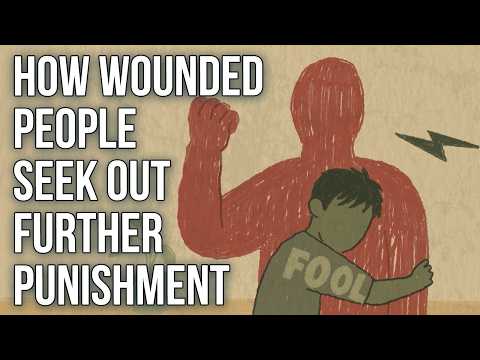
    受傷的人如何尋求進一步的懲罰 (How Wounded People Seek Out further Punishment)

    05:32受傷的人如何尋求進一步的懲罰 (How Wounded People Seek Out further Punishment)
    • It's just that for us, home was a place of grief and persecution. It's easy enough to see why children put up with poor treatment. They're born radically powerless. They can't run away. They are utterly at the mercy of others. They can't even think especially straight. What they must do, above all else, is adapt. Which in practice means learning to put up with poor treatment. They have to develop an advanced skill at not noticing quite how awful things are, an expertise at being unfazed by cruelty and neglect. Children in deprived circumstances tend to be geniuses at looking away, disassociating and making light of things. Of course, it might not be perfect that their father screams at them constantly, but there are some interesting shows on television and there's a really fascinating bit of the garden to explore in the morning. You can climb up the big tree and imagine it's a little house. And of course, ideally their mother wouldn't be so mocking and disloyal. But that's just the way things are, neither more or less sad than the fact it's often raining and there's a lot of homework to do. In any case, the bad treatment almost certainly has to do with something that they, the child, have done wrong. Badly treated children tend to take a compulsively generous view of those who injure them. Obviously, they aren't nasty on purpose. That would make no sense. Clearly, their ostensible brutality has sound explanations. It must be because they, the child, is in the wrong. That's why they're being neglected. That's why they've been declared fools. That's why they're being bullied. It's a great deal easier to believe that the parent is tough, yet fundamentally right, rather than gratuitously callous and unjustifiably hostile. In other words, what a bad childhood trains us to do, above all else, is to indulge meanness. The muscle that normally functions to repel attacks has had to be starved and has atrophied. In order to survive, we had to lose the ability to work out what was good and bad for us, lest we discover that we spent 18 years in the company of fiends. What this means for our futures is that we will be extremely poor at discerning when the partners we let into our lives cross the border into selfishness and malevolence. We'll continue under a narcoleptic command not to notice that we're being robbed and deceived. We'll be as blind to the blows now as we were then. For a long time, it simply won't occur to us to wonder why we've ended up paying for everything for the partner, or why they're unreliable in their promises, or constantly prioritise their friends over us, or are angrily defensive whenever we raise a complaint. We will simply, as we had to early on, fall into line and invent elaborate explanations for their behaviour. They're good, but they're tired. They're durable, but under pressure at work. They're fierce, but compensating for their childhood traumas, for which we have a lot of sympathy. Anything other than the more straightforward conclusion, we've fallen in with unconcerned egoists. We shouldn't compound our disloyalty towards ourselves by feeling, on top of everything else, ashamed for our tolerance. It isn't weakness, it's a survival strategy from childhood that served a very sensible purpose then but is liable to be ruining our lives now. To wake ourselves up, we need to consider our choices as if someone else had made them. We might wonder what we would advise a friend to do if they were in our situation. And through such a lens, we might start to perceive that the treatment we're facing isn't, as we've long thought, a sign of our partner's depth or complexity, but in the end, something much more humble, evidence that we need to get away. But this will be only a momentary liberation until we can understand the more fundamental issue, that the muscle most people use to eject poison has withered because of a distinctive history. We need to reverse the direction of our psychological fate. Our early suffering should not condemn us to yet more pain. It is what gives us an especially powerful claim on original sources of kindness, tenderness and calm.

      只是對我們來說,家是一個充滿悲傷和迫害的地方。很容易理解為什麼孩子們要忍受惡劣的待遇。他們生來就毫無力量他們無法逃避。他們完全任由他人擺佈。他們甚至連思考的能力都沒有他們必須做的,最重要的,就是適應。在實踐中,這意味著要學會忍受惡劣的待遇。他們必須發展出一種高級技能,即不去注意事情有多糟糕,擅長對殘忍和忽視不為所動。生活在貧困環境中的孩子往往是睜一隻眼閉一隻眼、脫離現實和輕描淡寫的天才。當然,他們的父親經常對他們大吼大叫,這可能並不完美,但電視上有一些有趣的節目,而且早上可以去花園裡探索一個非常迷人的地方

    B1 中級

    如何抱怨 (How to Complain)

    04:36如何抱怨 (How to Complain)
    • Mature complaint. In order to master such a feat, we must work with a background sense that we don't fundamentally deserve meanness and also that it won't on its own ever be able to destroy us.

      成熟的抗議。為了達成此壯舉, 我們須有根深蒂固的意識, 即我們不應該被惡意對待, 以及惡意永遠無法摧毀我們。

    B2 中高級

    福斯新聞澄清川普愛「礦工」!女記者們都在川普的黑名單上?| 愛倫秀 (Fox News Clarifies Trump Loves “Miners” & Female Reporters Are on Trump’s S**t List | The Daily Show)

    08:53福斯新聞澄清川普愛「礦工」!女記者們都在川普的黑名單上?| 愛倫秀 (Fox News Clarifies Trump Loves “Miners” & Female Reporters Are on Trump’s S**t List | The Daily Show)
    • The way you ask a question with the anger and the meanness is terrible.

      你問問題時帶著的憤怒和惡意,真的很糟糕。

    B1 中級

    為什麼人們會陷入不健康的關係中? (Why People get into Unhealthy Relationships)
    03:24為什麼人們會陷入不健康的關係中? (Why People get into Unhealthy Relationships)
    • Where others would despair of intransigence or meanness, we see every chance of being able to change a partner – so long as we keep quiet and hope. It can take an awfully long time until we are in any position to realise that all told, the situation does appear a little strange and somewhat irrevocable. That it may not be entirely to our advantage to be told again and again that we are mad for wanting greater gentleness, or demanding for seeking a deeper connection, or crazy for wondering why a partner spends so much time on their phone or out drunk with friends. We could be compared to a giant fish, a tuna perhaps, whose had its fins cut off and lost any powers of navigation, so that it bobs helplessly on the current, hoping against hope that it will be taken somewhere nice, but unable to exert any influence on its course. The famous expression runs, when people show you who they are, believe them. But it's hard to be very clear-eyed about who is good and bad when you happen to grow up with a heavy disincentive to perceive certain awkward truths about your own parents, because you were five years old, trapped in a house with them, and love wasn't readily available from anyone else. Our entire perceptual mechanism may have been twisted as a result. Like an animal that can't perceive certain frequencies of light, our emotional eyes may have grown up unable to see difficult traits for what they are. Coldness now just looks like honourable absorption in more important tasks. Sarcasm is read as wit. Being belittled feels like care. We're always more likely to think of ourselves as bad for failing to elicit kindness from a fundamentally lovely person whom we'll continue to adore and admire, despite one or two signs of trouble, as opposed to conceiving that we might have fallen in with a jerk. We may be deep into our lives before we decide we might have had enough of suffering, and start to be curious about what kindness and presence might feel like. We may ever so slightly determine that though our partner may be using every ounce of their considerable logic and charm to secure the status quo, they might in the end just be taking us for a long ride. We don't have to be here. We are, astonishingly, not five anymore. If we're not happy, we can run.

      別人會對不妥協或吝嗇感到絕望,而我們卻看到了改變伴侶的一切機會--只要我們保持沉默和希望。我們可能要花很長時間才能意識到,總的來說,這種情況確實有點奇怪,而且有些不可逆轉。有人一再告訴我們,說我們想要更溫柔是瘋了,說我們尋求更深層次的聯繫是苛求,說我們想知道伴侶為什麼花那麼多時間玩手機或和朋友出去喝酒是瘋了,這可能對我們並不完全有利。我們可以被比作一條巨大的魚,也許是一條金槍魚,它的鰭被切掉了,失去了導航的能力,只能無助地隨波逐流,滿懷希望地被帶到一個好地方,卻無法對自己的航向施加任何影響。有句名言說得好

    B1 中級

    我們的日本/美國家庭生活 🇯🇵🇺🇸 日本生活 EP 309 (Our Japanese/American Family Life 🇯🇵🇺🇸 Life in Japan EP 309)

    16:52我們的日本/美國家庭生活 🇯🇵🇺🇸 日本生活 EP 309 (Our Japanese/American Family Life 🇯🇵🇺🇸  Life in Japan EP 309)
    • to be mean just for meanness.

      我們也不會對牠們不好。

    A2 初級

    我們為何逃避愛情 (Why We Run From Love)

    03:33我們為何逃避愛情 (Why We Run From Love)
    • We can both know that our way of approaching love was out the outset a very logical and intelligent adaptation to conditions of emotional scarcity that we didn't choose and that has nothing to do with meanness or pathology.

      我們都可以知道,我們對待愛情的方式從一開始就是對情感匱乏條件的一種非常合乎邏輯和明智的適應,而這種情感匱乏條件並不是我們選擇的,也與卑鄙或病態無關。

    B2 中高級

    所有刻薄和惡意都是如何被遺傳下來的?! (How All Meanness Is Inherited)
    03:42所有刻薄和惡意都是如何被遺傳下來的?! (How All Meanness Is Inherited)
    • The meanness that we witness around us in the here and now, in the shops, in boardrooms, in bedrooms and online forums, is always by a law of psychological economy, something that's been, with appalling diligence, passed down from one person to another.

      我們在日常生活中,在商店裡、董事會會議室、臥室和線上論壇裡看到的惡劣,總是基於一種心理經濟學的法則,以令人震驚的勤勉,一代傳一代。

    • When a young man who's been belittled by his father manages to be kind to his children, When a young woman who's been taunted by her father doesn't torment her suitors and one day turns into a patient and kind hearted partner to a vulnerable man, we can appreciate anew what true alchemy it is to turn meanness into kindness.

      當一個被父親輕視的年輕人,能夠善待自己的孩子;當一個被父親嘲弄的年輕女子,不折磨她的追求者,並且有一天成為一個脆弱男人的耐心、善良的伴侶時,我們就能重新體會,將惡劣轉化為善良是多麼真正的煉金術。

    B2 中高級