femoral
US /'femərəl/
・UK /'femərəl/
影片字幕
Kratos' Blades of Chaos - Arcade Arms: God of War Ascension
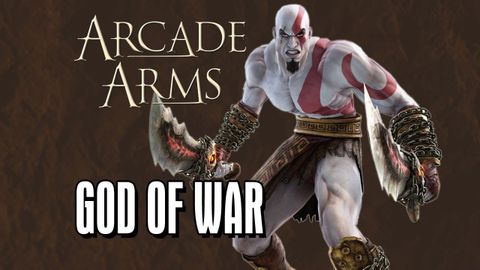
- A lot of cuts would go low as well, down to the femoral
很多刀口也會往下走,一直到股骨處
所以,你想成為一個心外科醫生[Ep.13]。
![所以,你想成為一個心外科醫生[Ep.13]。](https://thumbnail.voicetube.com/w/480/h/270/sdxz242qDFA.jpg)
- femoral artery in the leg. Once you work it up to the thoracic aorta, you can deploy the
腿上的股動脈一旦你把它弄到胸主動脈,你就可以部署好了
你想成為一名血管外科醫生嗎 [第 49 集] (So You Want to Be a VASCULAR SURGEON [Ep. 49])
![你想成為一名血管外科醫生嗎 [第 49 集] (So You Want to Be a VASCULAR SURGEON [Ep. 49])](https://thumbnail.voicetube.com/w/480/h/270/0BquVzzjJVU.jpg)
- One more example would a peripheral bypass, commonly from the femoral artery to the popliteal artery, to treat symptoms of impaired blood flow in the legs.
另一個例子是周邊動脈繞道手術,通常是從股動脈接到膕動脈,用來治療腿部血流不順的症狀。
- Using the previous examples, a needle can be used to access the femoral artery to deliver a stent to the internal carotid artery, a stent graft to the aorta, or a balloon to open up a blockage in the arteries of the leg.
以之前的例子來說,可以用針頭進入股動脈,將支架送到內頸動脈,或將支架移植物送到主動脈,或用氣球來打通腿部動脈的阻塞。

停止這樣做負重舉(拯救你的脊椎!) ft.斯圖爾特-麥吉爾博士 (STOP Doing Deadlifts Like This (SAVE YOUR SPINE!) ft. Dr. Stuart McGill)
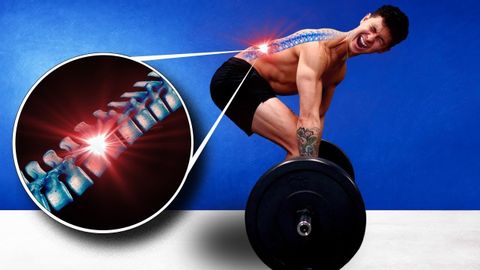
- When descending into the deadlift, if the foot stance is too narrow, you can see how in this particular person, you will get a mechanical collision between the top of the hip socket and the leg bone and that creates FAI or femoral acetabular impingement.
在下蹲負重時,如果腳的站姿過窄,你可以看到這個人的髖臼頂部和腿骨之間會發生機械碰撞,從而產生 FAI 或股骨髖臼撞擊。
緬甸:年輕叛軍如何改變被遺忘的戰爭進程 | BBC News (Myanmar: How armies of young insurgents are changing the course of a forgotten war | BBC News)
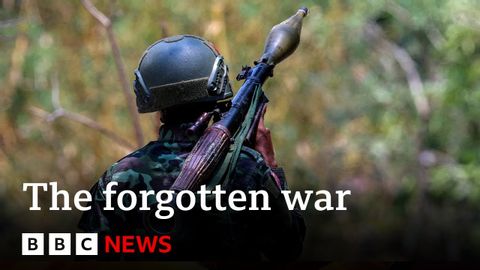
- This is a struggle of the young against the old. A new generation battling a military elite and it's Myanmar's youth that's sacrificing most. Ong Nye is just 23. He took shrapnel to his femoral artery in an attack on a military base. His comrades comfort him as much as they can.
這是一場年輕人與老年人的鬥爭。新一代與軍事精英的鬥爭,犧牲最大的是緬甸青年。翁奈只有23歲。在一次對軍事基地的襲擊中,他的股動脈被彈片擊中。他的戰友們儘可能地安慰他。
你需要的最後一段深蹲視頻 (The Last Split Squat Video You'll Ever Need)
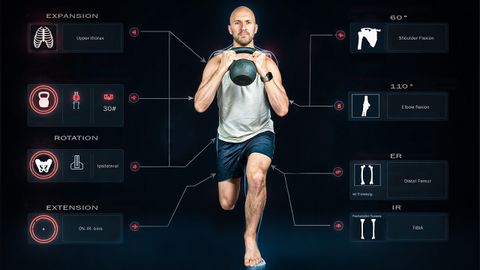
- Pelvic and femoral movement changes throughout the range.
骨盆和股骨運動在整個範圍內發生變化。
腹部檢查(檢查) 護理評估 | 腸道和血管音、觸診、檢查 (Abdominal Examination (Exam) Nursing Assessment | Bowel & Vascular Sounds, Palpation, Inspection)

- you could listen at the femoral arteries if you needed to.
如果需要的話,你也可以聽股動脈。
- And again, like I pointed out, you could listen at the femoral artery in the groin if you needed to.
再次提醒,就像我剛剛說的,如果需要的話,你也可以在腹股溝聽股動脈。
頤養天年:有問必答--第 11 集 - 20 年 5 月 7 日 (IMMACULATE DISSECTION: Ask Us Anything - Episode 11 - 7/5/20)
- I know I have a patient right now that has a ventral wall incisional hernia, and he's not been able to do a lot of his rehab that he's used to being able to do, I think it sounds like in the, since the pandemic and everything closed down, there's been a lot of caution, and he's found, he wore a brace as advice to him by his surgeon, and his surgery was actually postponed, because the interesting thing about openings and things like that in the anterior abdominal wall is the bigger ones are usually less dangerous, it's the small keyhole ones that are problematic, because if stuff can pass freely back and forth, that's fine, but if it passes through and gets stuck on the other side, that's a problem, so for this patient, he had had, he had had an incisional one, and then a very small one, interestingly enough, the incisional hernia was created because of, there was an inguinal hernia, and then there was a surgery with mesh, the mesh came loose, created a bowel obstruction, and then there was a full incision to address the incisional hernia, so the whole thing actually started from hernial repairs in the first place, which is really interesting, I'm not against, you know, addressing something surgically when it needs to be done, but we have to at least, you know, look at the sort of cause and effect of all this, and so since being sort of locked in with coronavirus and the pandemic, he has been bracing much, much, much more than usual, and the last update that I got this week is that there are now four extra hernias, and now it is absolutely essential, because they're very small and sort of sporadic all over the anterior abdominal wall, so four additionals, there's six total now, and that's with somebody who's been in a brace, and my sort of hypothesis on what's happened there is that the brace is not on 24-7, and so once you get used to that kind of support, it's different than when it's like a one, you know, a PR, a one rep max, you can't be doing a one rep max for 24 hours a day, so if the minute you start to accommodate that, your tissue starts to accommodate to that sort of false sense of security, it'll come out, you still cough and sneeze and fart in the middle of the night, and you know, anytime something like that happens, you're going to have some sort of potential for pressure leak, and you know, things take the path of least resistance, so bracing is a really interesting thing that I think we are all on the same page about, and you know, everything is always case specific, so we try not to make general blanket statements about anything, but you know, look at this too, and really ask yourself, like, what are we actually doing here, and does this solution match the problem that we are sort of facing? Yeah, I can't agree with you more about, like, it's a tough observation to have with a patient that you know you don't agree with the bracing, and I think taping is a lot less, of course, than bracing, and I know we've probably gotten off topic by talking about the bracing, but the whole point of this is that that feeling that you have to brace this person up is not really super effective, and just remember Anna's story about the incisional hernias, and the more that you create a sense of bracing in the front, I know why they're taught that, because there's a hernia, and that's the best way to go through the wall is through coughing, sneezing, defecating, you know, but the real focus in the therapy should be opening the sides, and then aponeuroses are broad, flat tendons, and tendons have the tensile strength of steel, so if you're starting to breach away from midline, ask yourself, why are they pulling away from midlines? Because the sides of the muscles don't have extensibility, so improving the extensibility of the sides of the ribs, I'm sure that's something that Anna's working on with her patient, and once COVID's over, you can probably do a lot more of it in person, but also very, very good analogies put into place, and good examples of cases. So we had another question about hip compression, is that right? And they were asking, was it the mechanisms of hip compression, or? It was, review the signs and symptoms of a compressed femoral head in the acetabulum, just any information around that, signs, symptoms, things like that.
我知道我現在有一個腹壁切口疝的病人,他不能做很多他習慣能做的康復訓練,我想這聽起來像是在,自從大流行病和一切都關閉以來,有很多謹慎,他發現,他穿了一個支架,這是他的外科醫生給他的建議、他的手術實際上被延後了,因為關於前腹壁的開口之類的東西,有趣的是,大的開口通常危險性較低,而小的鑰匙孔才有問題,因為如果東西可以自由地來回通過,那還好,但如果它通過並卡在另一邊,那就有問題了、有趣的是,切口疝的形成是因為腹股溝疝,然後又做了網片手術,網片鬆脫,造成腸梗阻,然後又做了全切口來解決切口疝、我並不反對在需要的時候通
- I mean, this is a really actually cool thing to talk about right after we talked about diastasis, because again, if this person doesn't have that lateral rib expansion that we are looking for in our assessments, and they start to, you know, sort of brace, and aren't able to get some of that tissue extensibility, they will start to compress their hips via this iliopsoas fascia that starts to blend in at the front of the hips, and they'll start to jam the femur into the acetabulum for a sense of stability that's, you know, not really an authentic place of stability, it's just sort of a strategy, and so we see this happen a lot in people who start to get these C-shaped signs and symptoms, they'll get these pinchy-pinchy kind of popping, clicking stuff rolling around, you put them in like a tabletop or a supine 90-90, or any sort of hip flex position, and they start to get a lot of referral down into the anterior thigh. You're really just sort of looking at a redirection of force, and so, you know, your body's efficient, it's going to get something done, but it may not always get it done with the most optimal structures to do that with, and so we want to make sure that we get appropriate force transfer from the abdomen, and we get that pelvic stability there to then transfer into the lower extremity, and, you know, a possible pathway for that, if someone doesn't have it, is iliacus, and so we talk about, you know, the appropriate ways to decompress the hip, and versus what the typical ways that people try to decompress their hip are, which gets really dramatic in a lot of people, and they, you know, they start to look for love in all the wrong places, and try to, you know, stretch their hip flexors out, and it's not really a hip flexor problem as much as it's a hip flexor that's sort of trying to kick in and give you a sense of stability, so we do show ways to maintain your IDQs and decompress the hip in a way that it is safe, and not something that is, you know, going to put you at a risk of, like, a labral tear, or something like that, where someone all of a sudden breaches some tissue capacity, and goes into a tissue sensibility that they don't necessarily have, and just point out what you're talking about, Anna. Anna covers iliacus in a lot of detail in IDQ, and then the three of us discuss pectineus. Danny does some really great art on that, but when it comes to hip compression, it's intra-abdominal pressure loss from conjoint tendon, the connection to iliopsoas fascia, so you always want to check with someone who has the signs and symptoms of just feeling like a hip is jamming in its socket, pelvic inclination on that side, hip hike on that side is usually present, and then you can see, I think in the DVD I'm talking about this, typically you'll get Anna talking about this, but she's talking about iliacus, and does such a beautiful job of demonstrating that, but in this free video that we have on the OTP website, you can listen to a little excerpt of our DVD, where we give you a little sneak peek into IDQ, into when Anna describes this in a lot more detail, but you can see me on Dr. Jake Altman here showing that the person's in kneeling position, we're putting tension into the iliopsoas fascia here, to centrate the femur, and the person's breathing into the sides of the ribs, you see me cueing the sides of his rib cage, this is because muscles like transverse abdominis, internal abdominal oblique, they're attaching to that iliopsoas fascia that Anna's describing, and helping with force distribution, and what's actually flexing the hip, the irony of the matter, is not the hip flexors like Anna's describing, it's actually you get gut pressure, and then you cue this tissue to come up, and it's a reflexive cue, which is pretty fantastic to think about, because people blame the hip flexors for so much, and they end up weakening their hip flexors, and then they don't train them in flexion, and in ID we would never do that, we train things in all of their phases, so if we know that psoas and iliacus are contributors to this hip compressive thing, through their attachment to fascia, and their attachment to the chondroit tendon, then just nearby is pectineus, and pectineus is an adductor that's innervated by the same thing as iliacus, femoral nerve, so pectineus is innervated by part femoral nerve, that's the part that flexes the femoral nerve, and then there is the adductor portion, which is obturator, because the bowels go together, right, if you want to adduct, you use obturator nerve, and so the obturator nerve part of this jams the femur and the socket even more through adduction and internal rotation, so now your flexed adducted internally rotated position is what we call hip compression, and hip compression is healthy, it's present during the loading phase of ambulation, where see how Jake's leg is forward here, that's a hip compressed state, and that's a healthy state, he has a hip decompressed state on this side, meaning you have extension, abduction, and external rotation, so the de-approximation of the femoral head from the acetabulum, so in this phase, you'll see him EQing his breathing, having him annealing, and we're trying to decompress his hip, so for people in ID, what we try to get them to do is meet them where they're at, take them where they're not, try to analyze if it's the iliacus, it's the pectineus, if it's a breathing problem, or all three, and then we help them centrate the femur relative to their breathing and pelvic position, we do these things called pendulums, where we move them back and forth, and I was trying to find the YouTube of looking for love in all the wrong places, because Anna inspired us to do an Instagram of it, I'm trying to remember if I put it on the YouTube, let me see if I did put it on the YouTube, it looks like I didn't, so you'll have to go to our Instagram to find it, but if you go to our Instagram and look up iliacus pendulum, or hip flexor pendulum, actually I think it's called hip flexor pendulum, hold on, and then you'll see me showing the demonstration of looking for love in all the places, but watching Anna Falkner do it can never beat, I mean it's so good, it's so good, but let me look up hip flexor pendulum really quickly for you, see if I can find it, are you guys seeing my screen now, yes, yeah, basically if you see somebody trying to stretch their hip flexors, and it sounds like they should have like chariots of fire playing in the background, and you want to give them a streamer, they're probably doing it wrong, I know right, I was fairly certain that I had put it on YouTube, but I must not have, so which is a real shame, because it's really, really good, and I'll stop the share just so I can find it, but the way that we cue hip compression, the signs and symptoms of course are hip jamming at socket, you want someone to yank it out, pelvic inclination on that side, internal rotation with flexion bias, when they do a toe touch, usually their knee will bend, when you have various activities, you'll, the person always says they get relief when someone tractions their hip, so they've probably been assigned hip flexor stretches out the wazoo, and it's not going to get it done, just as Anna described, because first of all, the person feels an enormous amount of load in that position, so they may not actually like it, and so if they don't like it, they may not do it, oh I almost found it folks, if you go to our Instagram and our IGTV and you find it, it's called the hip flexor, I just scrolled past it on accident, my sincerest apologies, now I can't find it, so unfortunately you're going to have to do some hunting until I can upload it onto our YouTube, so I thought that
我的意思是,這是在我們談完腹膜膨出之後要談的一件很酷的事情,因為同樣,如果這個人沒有我們在評估中尋找的肋骨外側擴張,並且他們開始,你知道,有點像支撐,並且無法獲得一些組織的伸展性,他們就會開始通過髂腰筋膜壓迫他們的髖部,而髂腰筋膜開始在髖部前方融合、他們會開始將股骨塞入髖臼,以獲得一種穩定感,你知道,這並不是真正的穩定感,這只是一種策略,所以我們經常看到這種情況發生在那些開始出現 C 型體徵和症狀的人身上、你把他們放在桌面上,或者仰臥 90-90 度,或者任何一種屈髖姿勢,他們就會開始向大腿前側發出大量信