backbend
US /'bækˌbend/
・UK /'bækbend/
A1 初級
n.名詞後彎
影片字幕
《十分鐘攝影挑戰》之擅闖邁阿密國際機場篇 (10 Minute Photo Challenge Crashes Miami International Airport)
05:57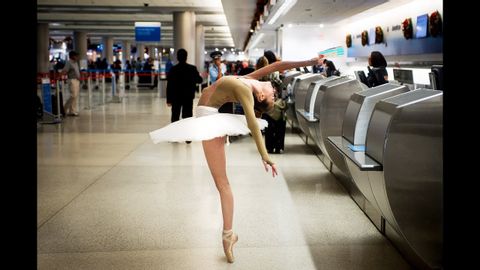
- Backbend jump.
用後彎的姿勢跳起來
瞭解柔韌性訓練中的拉伸與壓縮 | 解剖學實驗室 (Understanding Tension vs. Compression in Flexibility Training | Anatomy Lab)
06:45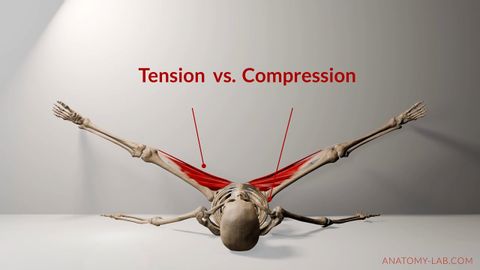
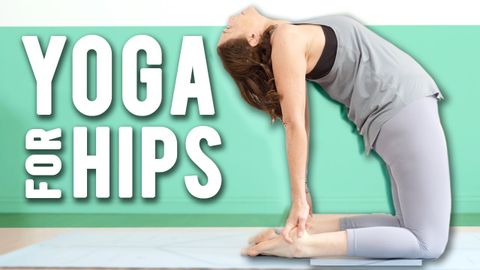
- Well, here's a rule of thumb to help you distinguish between tension and compression Compression usually happens on the opposite side of the stretch For example, if you are bending forward to stretch your hamstrings, but feel a hard stop in the front of your hip joint That's likely compression It's a very simple way to tell whether you're dealing with muscle tension or bone compression With this rule in mind, let's experiment on how this feels in different parts of the body First, let's explore a backbend As you lean backwards, you feel tension in the front of your body, your abdomen and hip flexors But if you continue bending further, you'll eventually feel a hard stop in the backside of your spine where the spinous tips of the vertebrae are coming into contact The spinous processes are those little bony tips on your spine and their length and thickness can both affect how far you can bend backwards Shorter or thinner spinous processes allow for more movement, while longer or thicker ones create an earlier hard stop What's interesting is that this variation in length and thickness can occur throughout the spine So for some people, compression may happen in the lower back, while others feel it higher up or in the mid-back or even in the neck Take a moment again to try this for yourself and notice where in your spine you feel compression first Is it your lower back, your mid-back or somewhere else?
例如,如果你向前彎腰拉伸膕繩肌,但感覺髖關節前部硬生生地停了下來,這很可能是壓縮、首先,讓我們探索一下後彎的感覺 當你向後傾時,你會感覺到身體前部、腹部和髖部屈肌的緊張、脊柱棘突是脊柱上的小骨尖,它們的長度和厚度都會影響你向後彎曲的程度 較短或較薄的脊柱棘突允許更多的運動、有趣的是,這種長度和厚度的變化可能發生在整個脊柱上,是以對有些人來說,壓迫可能發生在下背部,而有些人則感覺壓迫發生在更高的位置、中背部甚至頸部。
- This is your unique bone structure determining the limit of your backbend Now that we've seen how compression works in the spine, let's move on to a different kind of stretch For example, a wall stretch Lie on your back with your legs up against the wall as if you were making a split As you let your legs open out to the side, you'll feel tension in the muscles of the inside of your legs Particularly the adductors But if you feel a hard stop on the outside of your hips where the femur meets the pelvis, that's compression Also pay attention whether you feel any differences between the right and left side It's common for people to have subtle differences in muscle tension or bone shape If you only feel the stretch in your adductors and not compression, that's again perfectly fine It just means you haven't hit your bone limit yet and you have potential for stretching Try this exercise and notice what you feel, especially when comparing the left and right side Lastly, let's try hip flexion with a bent knee Try pulling your knee towards your chest with your leg bent In this position, you'll probably feel more tension in the back of your hip or glutes But as you keep pulling your knee closer, you will eventually reach a point where your movement stops due to compression This is where the head of the femur meets the pelvis Just like with the wall stretch, compare the right and left sides There may be differences in how each side feels One side might reach compression before the other Take some time to play around with the position of your femur and notice where the restriction is coming from If you don't encounter compression, that means you haven't reached your bone limit yet and you have more room to stretch If you do feel compression, don't be discouraged It's your body's way of showing you your limits and understanding this will help you to move more safely and effectively in your practice Remember, whether it's tension or compression, learning to feel the difference will help you to stop fighting against your body and start working with it Before we wrap up for today, I want to give credit where credit is due This knowledge about tension and compression wasn't discovered by me It was pioneered by Paul Grilly, who's a yin yoga teacher and a master of his art If you are interested in learning more, I highly recommend checking out his website He has a lot of images of human bones that will show you exactly what we are talking about today And it will give you an even clearer understanding of these concepts I want to thank you for your time today and I hope you enjoyed this video and you will benefit from it If you have any questions, feel free to leave them in the comments You can support the channel by subscribing or sharing or liking And of course, if you want to, follow me on Instagram or check out my store Until next time, here in the Anatomy Lab Anatomy of the Body
這是你獨特的骨骼結構決定了你後彎的極限,現在我們已經瞭解了壓縮在脊柱中的作用,讓我們換一種拉伸方式,例如,牆壁拉伸 仰臥,雙腿靠牆,就像你在做劈叉一樣,當你讓雙腿向兩側打開時,你會感覺到腿內側的肌肉緊張,尤其是內收肌、如果你感覺到臀部外側股骨與骨盆的交界處有硬塊,那就是壓迫感 還要注意你是否感覺到左右兩側的差異、這也完全沒有問題,這只是說明你的骨骼還沒有達到極限,你還有拉伸的潛力 試試這個練習,注意你的感覺,尤其是在比較左右兩側時 最後,讓我們試試屈膝屈髖 在這個姿勢下,你的腿彎曲,試著將膝蓋拉向胸部、但
下背部疼痛時應避免這兩種瑜伽姿勢(必知小貼士) (Avoid these 2 yoga poses if you have lower back pain (Must - know Tips))
03:34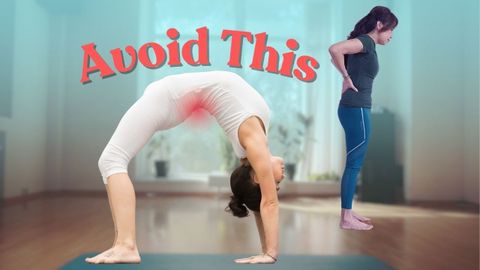
25 分鐘全身瑜伽流 | 伸展運動,打開身體,感覺良好! (25 Min Full Body Yoga Flow | Stretches to open your body & feel good!)
25:56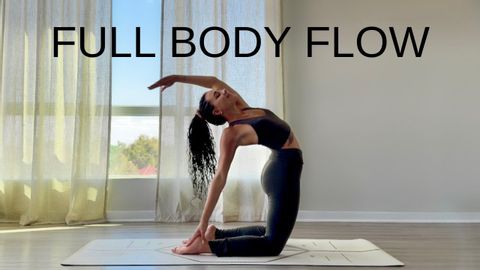
- Inhale, take a full breath in your backbend, and then release.
吸氣,在後彎中充分呼吸,然後鬆開。
- Inhale for a standing backbend, sweep the arms up high, palms touch.
吸氣做站立後彎,雙臂高高掃起,手掌相觸。