今日挑戰句子
影片不是英文?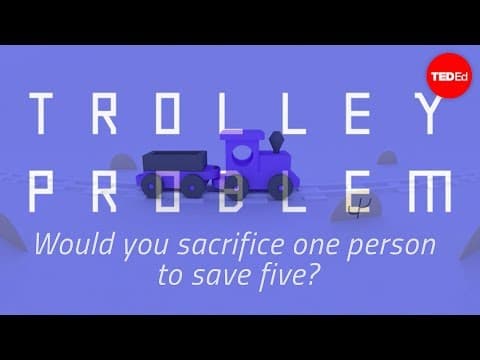
Our instincts tell us that deliberately causing someone's death is different than allowing them to die as collateral damage.
直覺告訴了我們,故意造就某些人死亡與間接造成他們死亡是兩回事。
學習重點
1. instinct本能;直覺
instinct
[ˋɪnstɪŋkt](n.)本能;直覺
2. deliberately故意地
deliberately
[dɪˋlɪbərɪtlɪ](adv.)故意地
3. collateral附帶的
collateral
[kəˋlætərəl](adj.)附帶的


Mia Liu3 年前
Intro
Hi everyone! How are you today? I am your new host Mia, it is so nice to meet you on VoiceTube!
Every morning, when you wake up, what is the first thing that comes to your mind?
Is “ Should I turn off the alarm clock and sleep for 5 more minutes“ or “What should I eat for my breakfast? “
Or later, you might struggle with what to wear today, the blue jeans with a white shirt, or the new violet dress you just bought yesterday.
We are all bothered by these annoying and trifle choices every day, aren’t we?
And more often, we fall into dilemmas, in which the situation becomes more complicated. We are torn between conditions that are equally desirable or undesirable. So here comes with a famous and intractable trolley question: Would you save five people but sacrifice one person?
I know you might need some time to ponder on this difficult question, sobut before that, let’s take a look at today's sentence first.
Sentence
Our instincts tell us that deliberately causing someone’s death is different from allowing them to die as collateral damage.
Tips
Instinct: 2 syllables, “ in” and “ stinct,” while we have to stress on the first syllable “in.” So it will sound like “ instinct,” instead of “instinct.”
Deliberately: The adjective form is deliberate, 4 syllables. “De” is /dɪ/, “ lib” is /lɪb/, “er” is /ɚ/, “ ate” is /ət/. And here is the adverb form, so add up “ ly” at the end of the adjective. Then we get, De-lib-er-ate-ly.
Collateral: The pronunciation of the first vowel “o” is not /ɑ/, but /ə/, as a result, co is pronounced /cə/. So is the “ te” in this word, the pronunciation of vowel e here is /ə/, so te in this word is pronounced /tə/. Collateral, collateral
Vocabulary
instinct (n.) KK[ˋɪnstɪŋkt] IPA /ˈɪn.stɪŋkt/
Def: the way people or animals naturally react or behave, without having to think or learn about it
本能;直覺
Wild animals rely on instincts to survive and compete.
野生動物仰賴本能去生存以及競爭。
deliberately (adv.) KK [dɪˋlɪbərɪtlɪ] IPA /dɪˈlɪb.ɚ.ət.li/
Def: intentionally
故意地
Some adolescents might deliberately disobey their parents.
有些青少年可能會故意地違抗他們的父母。
collateral (a.) KK[kəˋlætərəl] IPA /kəˈlæt̬.ɚ.əl/
Def: connected but less important, or of the same family although not directly related
附帶的
Decreasing the risks of diabetes and cancers is one of the collateral benefits of the vegan diet.
ShakesBeer3 年前
今天的句子聽起來是 different than 而不是 that
雖然我個人比較常用 different from 啦!
EmmaGo3 年前
Our instincts tell us that deliberately causing someone's death is different than allowing them to die as collateral damage. 直覺告訴我們,蓄意讓某人死亡,與間接造成他們死亡是兩回事。
◆ collateral [kəˋlætərəl]
(adj.)並行的;附屬的,附帶的;旁系的,間接的;擔保的,有擔保的
(n.)旁系親屬;擔保品,抵押品;[醫]側,副(血管或神經)
◆ instinct [ˋɪnstɪŋkt] (n.)本能,天性;直覺
✿ deliberate [dɪˋlɪbərɪt] (adj.) 故意的,蓄意的(=intentionally);深思熟慮的,慎重的,謹慎的;不慌不忙的,從容的
✿ deliberate [dɪˋlɪbəret]
(vi.)仔細考慮,思考;商議
(vt.)仔細考慮,深思熟慮,商議
✿ deliberately [dɪˋlɪbərɪtlɪ] (adv.)慎重地,謹慎地;故意地,蓄意地 ;從容不迫地,不慌不忙地
Intro : Hi everyone! How are you today? I am your new host Mia, it is so nice to meet you on VoiceTube! Every morning, when you wake up, what is the first thing that comes to your mind? Is “ Should I *turn off(關掉) the alarm clock and sleep for 5 more minutes“ or “What should I eat for my breakfast? “Or later, you might struggle with what to wear today, the blue jeans with a white shirt, or the new violet([ˋvaɪəlɪt]紫蘿蘭色的) dress you just bought yesterday. We are all bothered(擔心的) by these annoying and trifle([ˋtraɪf!]瑣事) choices every day, aren’t we? And more often, we fall into
dilemmas(dilemma[dəˋlɛmə]困境,進退兩難), in which the situation becomes more complicated. We are torn(難以做出抉擇的) between conditions that are equally(同樣地) desirable([dɪˋzaɪrəb!]引起慾望的) or undesirable. So here comes with a famous and intractable([ɪnˋtræktəb!]棘手的) trolley([ˋtrɑlɪ]有軌電車) question: Would you save(拯救v.) five people but sacrifice([ˋsækrə͵faɪs]犧牲v.) one person? I know you might need some time to ponder(仔細考慮) on this difficult question, so before that, let’s take a look at today's sentence first.
unickname3 年前
☺Our instincts tell us that deliberately causing someone's death is different from allowing them to die as collateral damage.慎重地、謹慎地;故意地、蓄意地;從容不迫地、不慌不忙地
我們的直覺告訴我們,蓄意造成某個人死亡,與讓那5個工人因為間接傷害而死是兩回事。
【心得】如果那個人的體型大到可以讓失控的電車停下來,那我應該推不動他吧!
■collateral [kəˋlætərəl] (adj.)附屬的、附帶的、次要的;(親戚)旁系的、間接的;(有)擔保的
(n.C)旁系親屬;側、副(血管或神經)
(n.U)擔保品、抵押品
■deliberately [dɪˋlɪbərɪtlɪ]
(n.U)逃跑、逃亡;私奔;(馬的)脫韁奔逃
■instinct [ˋɪnstɪŋkt] (n.C or U)本能、天性[(+to-v)];直覺[(+for sth)]
Niby3 年前
Day 2 (07/08/2022)
Chunks, *stress*, and /linking consonants/:
Our instincts /tell us/ that *deliberately* causing someone's *death*
is /*different* that/ allowing them to die
as *collateral* damage.
Henry Tsai3 年前
Our instincts tell us that deliberately causing someone's death is different that allowing them to die as collateral damage.
Seven3 年前
Vicky3 年前
我小六的時候,老師第一次和我們討論這個議題(如果你是列車長,火車煞車失靈,你會選擇走原本的道路但會撞死五名修鐵路工人,還是選擇衝上月台,但會撞死一名無辜的旅客),當初我的決定是犧牲一人換取五人的性命。但當我現在是大學生,某一堂課又提起這個問題,我的選擇是不改變火車行徑路線,如次一來那名旅客就不會因為我的緣故而死,這是一個責任問題。原本差車失靈不見得是列車長的過錯,但改變行徑路線也許就是。可能長大以後變得比較會想事後要承擔的責任吧,跟小時候純純得想拯救比較多人不一樣。
Stanley (彭奕崴) Peng3 年前
Erin Yu3 年前