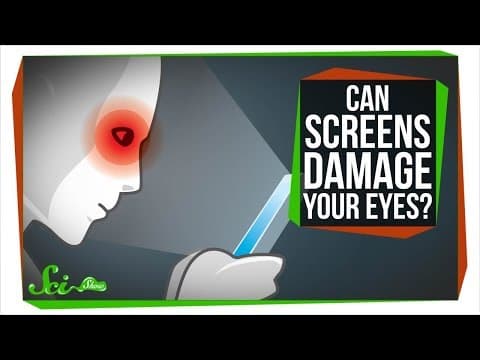
Luckily, the symptoms of digital eye strain go away when you give your eyes a proper rest, and studies haven't shown any long-term effects even if you suffer from it regularly.
Intro: Welcome back VoiceTubers! Digital screens are all around us and they are a part of everyone’s life today. From the moment I wake up, I check my phone for unanswered messages. When I’m traveling on the bus or MRT, I see everyone’s eyes glued to their digital devices. At work, most people work in front of a computer screen and even after work, many of us spend our leisure time watching shows and movies on our iPads or TV!
I have a brother who is an optometrist and he told me that there’s actually no scientific evidence to show that blue light emitted from digital screens can damage our eyes. Luckily he told me, right before I was about to purchase these blue-light protection glasses.
When we come back later, let’s talk about the negative effects too much screen time actually has on our health. But first, let’s check out our pronunciation challenge.
Sentence: Luckily, the symptoms of digital eye strain go away when you give your eyes a proper rest, and studies haven't shown any long-term effects even if you suffer from it regularly.
Pronunciation tip:
Digital - has three syllables. Make each syllable quick and short. Go away - don’t pause after the word go, try and link these words together. When you give - link this phrase together to sound more natural when speaking. Effects - the first e is an ‘I’ sound which is an unstressed syllable, the second syllable is stressed and sounds like ‘fact’. Regularly - has four syllables. Try to put the stress on the first syllable and make the rest of the syllables short.
Vocab: strain (n.) KK[stren] IPA /streɪn/ 壓力;拉力 a force or influence that stretches, pulls, or puts pressure on something, sometimes causing damage
Example: The torrential rain flooded the river and put so much strain on the bridge that it collapsed. 暴雨淹沒了河流,使橋樑承受太大的壓力,以至於它倒塌了。
proper (adj.) KK[ˋprɑpɚ] IPA/ˈprɑː.pɚ/ 適合的;恰當的 real, satisfactory, suitable, or correct
Example: I was so busy today, I haven’t had time to have a proper meal yet. 今天太忙了,還沒來得及好好吃飯。
long-term (adj.) KK[ˋlɔŋ͵tɝm] IPA /ˌlɑːŋˈtɝːm/ 長期的 continuing a long time into the future
Example: She has been in a long-term relationship with her boyfriend since junior high. 她與她男友從初中就開始長期的交往。
Outro:
Our video explains that too much screen time won’t actually cause any permanent damage to your eyes. However, here are a few ways your health can be negatively affected by spending too much time in front of a digital screen:
The first one is obesity. Especially if you’re glued to your chair for hours playing a video game instead of getting the adequate physical exercise you need. I recommend taking a walk after dinner instead of watching TV.
The other common issue is neck and back pain, which is caused by poor posture. If you’re like me, who spends a lot of time in front of the computer screen each day, it’d be wise to invest in a comfortable ergonomic office chair. Ensure that your arms are rested at a comfortable angle on your desk, so you don’t put too much strain on your shoulders.
Also, the light emitted from electronic devices interferes with the brain’s sleep cycle and can prevent getting a good night’s sleep. It’s best to wind down without any screen activity for at least an hour before you climb into bed.
People nowadays are so attached to their digital devices, we forget to spend good quality time with our family and friends. We shouldn’t rely on the screen so much for recreation. Next time you’re bored, try taking a walk outside, go for a bike ride, read a book or even play a board game!
Alright, it’s time for me to wrap up today’s episode. Have a great week ahead and I’ll see you guys here again next week.
P.S. 錄完才想到我完全忘了講~ 最重要的就是要讓眼睛擁有足夠的休息!
0:00
ShakesBeer3 年前
0:00
Leeway3 年前
Luckily, the symptoms of digital eye strain go away when you give your eyes a proper rest, and studies haven't shown any long-term effects even if you suffer from it regularly.
0:00
Kate Shao3 年前
0:00
Linda Rainie3 年前
Luckily, the symptoms of digital eye strain go away when you give your eyes a proper rest, and studies haven't shown any long-term effects even if you suffer from it regularly. And if you want to avoid that pain in the first place, doctors recommend you take a 20 second break from your screen every 20 minutes, staring off at an object 20 feet away.


Jenny3 年前
[Transcript]
Intro:
Welcome back VoiceTubers! Digital screens are all around us and they are a part of everyone’s life today.
From the moment I wake up, I check my phone for unanswered messages. When I’m traveling on the bus or MRT, I see everyone’s eyes glued to their digital devices. At work, most people work in front of a computer screen and even after work, many of us spend our leisure time watching shows and movies on our iPads or TV!
I have a brother who is an optometrist and he told me that there’s actually no scientific evidence to show that blue light emitted from digital screens can damage our eyes. Luckily he told me, right before I was about to purchase these blue-light protection glasses.
When we come back later, let’s talk about the negative effects too much screen time actually has on our health. But first, let’s check out our pronunciation challenge.
Sentence:
Luckily, the symptoms of digital eye strain go away when you give your eyes a proper rest, and studies haven't shown any long-term effects even if you suffer from it regularly.
Pronunciation tip:
Digital - has three syllables. Make each syllable quick and short.
Go away - don’t pause after the word go, try and link these words together.
When you give - link this phrase together to sound more natural when speaking.
Effects - the first e is an ‘I’ sound which is an unstressed syllable, the second syllable is stressed and sounds like ‘fact’.
Regularly - has four syllables. Try to put the stress on the first syllable and make the rest of the syllables short.
Vocab:
strain (n.) KK[stren] IPA /streɪn/
壓力;拉力 a force or influence that stretches, pulls, or puts pressure on something, sometimes causing damage
Example:
The torrential rain flooded the river and put so much strain on the bridge that it collapsed.
暴雨淹沒了河流,使橋樑承受太大的壓力,以至於它倒塌了。
proper (adj.) KK[ˋprɑpɚ] IPA/ˈprɑː.pɚ/
適合的;恰當的 real, satisfactory, suitable, or correct
Example:
I was so busy today, I haven’t had time to have a proper meal yet.
今天太忙了,還沒來得及好好吃飯。
long-term (adj.) KK[ˋlɔŋ͵tɝm] IPA /ˌlɑːŋˈtɝːm/
長期的 continuing a long time into the future
Example:
She has been in a long-term relationship with her boyfriend since junior high.
她與她男友從初中就開始長期的交往。
Outro:
Our video explains that too much screen time won’t actually cause any permanent damage to your eyes. However, here are a few ways your health can be negatively affected by spending too much time in front of a digital screen:
The first one is obesity. Especially if you’re glued to your chair for hours playing a video game instead of getting the adequate physical exercise you need. I recommend taking a walk after dinner instead of watching TV.
The other common issue is neck and back pain, which is caused by poor posture. If you’re like me, who spends a lot of time in front of the computer screen each day, it’d be wise to invest in a comfortable ergonomic office chair. Ensure that your arms are rested at a comfortable angle on your desk, so you don’t put too much strain on your shoulders.
Also, the light emitted from electronic devices interferes with the brain’s sleep cycle and can prevent getting a good night’s sleep. It’s best to wind down without any screen activity for at least an hour before you climb into bed.
People nowadays are so attached to their digital devices, we forget to spend good quality time with our family and friends. We shouldn’t rely on the screen so much for recreation. Next time you’re bored, try taking a walk outside, go for a bike ride, read a book or even play a board game!
Alright, it’s time for me to wrap up today’s episode. Have a great week ahead and I’ll see you guys here again next week.
P.S. 錄完才想到我完全忘了講~ 最重要的就是要讓眼睛擁有足夠的休息!
ShakesBeer3 年前
Leeway3 年前
Luckily, the symptoms of digital eye strain go away when you give your eyes a proper rest, and studies haven't shown any long-term effects even if you suffer from it regularly.
Kate Shao3 年前
Linda Rainie3 年前
Luckily, the symptoms of digital eye strain go away when you give your eyes a proper rest, and studies haven't shown any long-term effects even if you suffer from it regularly.
And if you want to avoid that pain in the first place, doctors recommend you take a 20 second break from your screen every 20 minutes, staring off at an object 20 feet away.
Julien G3 年前
Mama Q3 年前
李佳駿3 年前
KSC3 年前
Seven3 年前